
SECTORS
Cleanroom Lighting
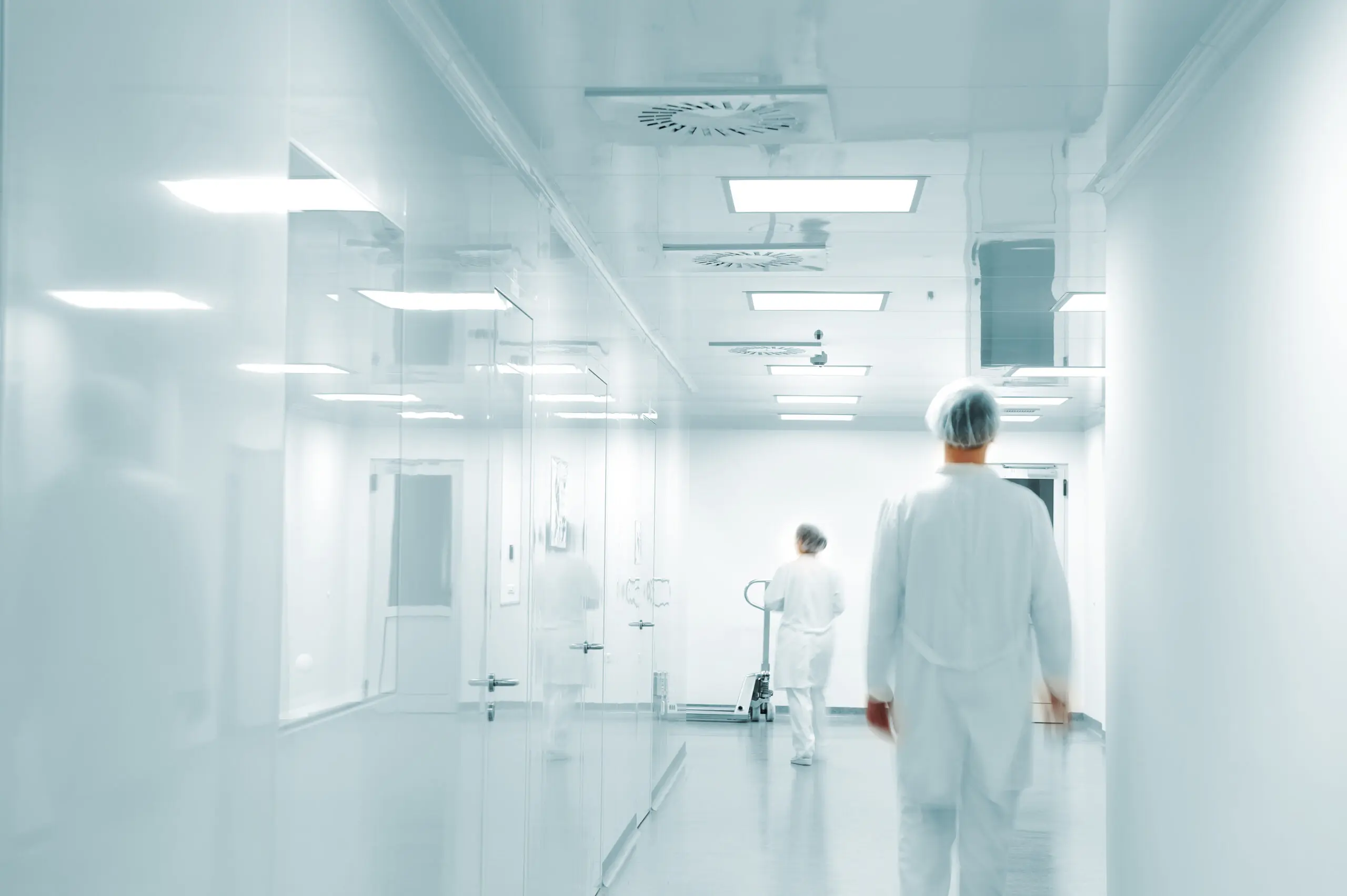
Solite Europe Ltd is a leading manufacturer and supplier of clean room lighting equipment for laboratories, pharmaceutical areas, semi-conductor manufacturing areas, healthcare, kitchens and food preparation applications. We have provided integrated lighting solutions for many of the blue chip pharmaceutical manufacturers, both in Europe and world wide.
At Solite we design and manufacture our luminaires from our new production and office facility in Stockport, Cheshire to the highest standards – up to an IP65 specification – to prevent the ingress of dust and moisture. Our luminaires are intended for use in areas where maintaining clean atmospheres are essential. Maintaining room integrity is our first concern when producing clean room luminaires.
Solite Europe’s product range also incorporates many ancillary clean-area fitments such as vision panels (both single and double glazed), filter housings for HEPA or general room filtration, escape hatches and through access panels. We specialise in providing rear access luminaires built to withstand both accidental and full walk on capability by maintenance staff.
Combining our clean area knowledge, design expertise and in house manufacturing capabilities, we are able to produce bespoke lighting solutions to the most exacting requirements. We can make modifications to existing product ranges or produce luminaires and systems from concept to supply.
The company is committed to continuous improvement and the highest standards (Solite Europe is certified to ISO 9001:2015), and is proud to be regarded as the leading lighting manufacturer in the Clean Area sector.
Cleanroom Products
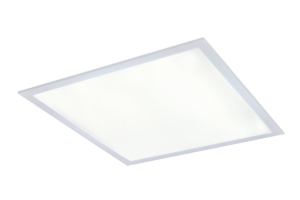
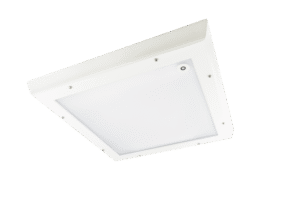
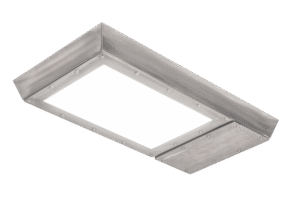
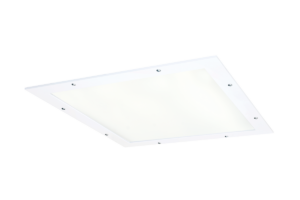
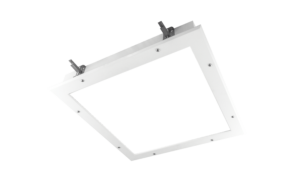
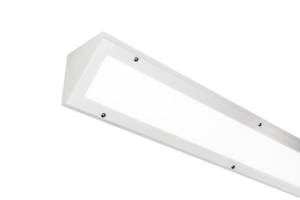
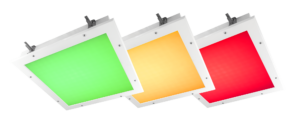
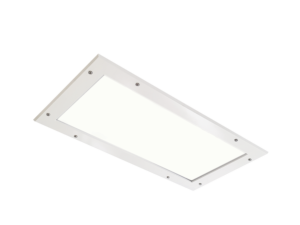
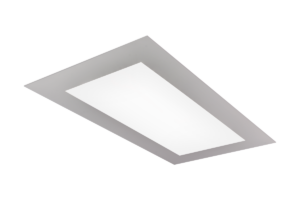
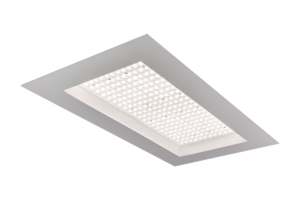
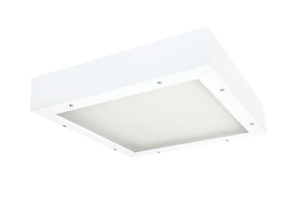
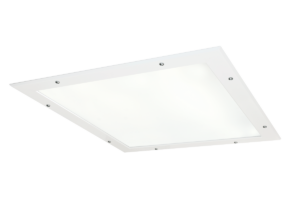
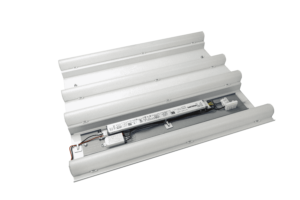
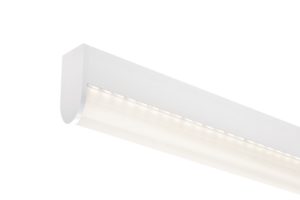


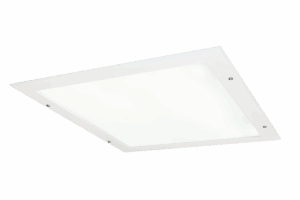
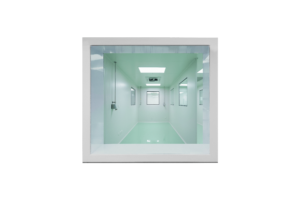
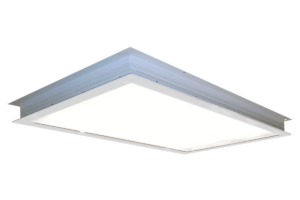
Cleanroom lighting
For more information on our cleanroom range please contact us using the button below or at the office on 0161 320 9999.
Cleanroom Lighting FAQs
Cleanroom luminaires should be suitable for the room’s target classification under ISO 14644-1, with designs that minimise particle generation, support controlled airflow, and withstand validated cleaning protocols. In regulated sectors such as pharmaceutical and life sciences, fixtures may also need to align with EU GMP Annex 1, HACCP or internal validation standards. Specifiers should request documented evidence of ingress protection, material compatibility and cleanability to support audit readiness.
- Where laminar flow needs to be maintained, consider specific laminar-flow luminaires, such as the Solite Sigma.
For most controlled environments, IP54-IP65 is standard, depending on cleaning regimes. Higher ratings are recommended where wash-down, vapourised hydrogen peroxide (VHP) or aggressive disinfectants are used. The key consideration isn’t just dust protection but the ability of seals, gaskets and lenses to maintain integrity over repeated sanitisation cycles.
- Assembly/packing: 300-500 lux
- General production and processing: 500-750 lux
- Inspection/quality control: 750-1,000+ lux
- Laboratory/precision work: 1,000+ lux
Uniformity and glare control are equally important. Poor uniformity increases inspection errors and operator fatigue. Specifying higher CRI (80-90+) improves visual accuracy for colour-critical tasks. For further detail, reference the Solite Interactive Guide.
Materials should be non-porous, corrosion-resistant and easy to sanitise. Powder-coated steel, aluminium or stainless steel housings with smooth finishes are common. Avoid textured coatings, exposed fasteners or crevices where particles or microbes can accumulate. Lens materials should resist yellowing and chemical degradation.
- relamping frequency
- maintenance interventions in controlled areas
- downtime for revalidation
- ceiling grid compatibility
- maintaining room classification during works
- minimising downtime
- like-for-like aperture sizes
- electrical and control integration
- technical datasheets
- photometric files (IES/LDT)
- IP and materials specifications
- cleaning/chemical resistance information
- installation and maintenance procedures
- unusual ceiling systems
- high-temperature or low-temperature rooms
- integrated service panels
- specialist inspection zones
- unique compliance or spatial constraints
Cleanroom lighting refers to luminaires specifically designed for contamination-controlled environments such as pharmaceutical, laboratory, electronics and food production facilities. Fixtures are sealed, easy to clean and engineered to prevent particle build-up while maintaining consistent, high-quality illumination.
Cleanroom lighting is commonly specified for environments where air quality, hygiene and compliance are critical, including pharmaceutical manufacturing, medical device production, laboratories, semiconductor fabrication, aerospace assembly and food processing plants.
Standard fittings often contain vents, exposed components or uneven surfaces that trap dust and shed particles. They may also interfere with controlled airflow or fail under frequent cleaning. Purpose-built cleanroom luminaires are sealed and designed to maintain room classification and compliance.
Both options are available. Recessed, flush-mounted luminaires are most common as they support smooth ceilings and controlled airflow. Surface-mounted or suspended options may be used in lower-classification or specialist spaces depending on layout and services.
Most LED cleanroom luminaires are rated between 50,000 and 100,000 hours, significantly reducing maintenance and relamping compared to fluorescent systems. This is particularly valuable in controlled environments where access requires shutdowns or revalidation procedures.
Yes. LED cleanroom lighting consumes substantially less energy than legacy fluorescent or HID systems while providing higher output and better control. When paired with dimming or occupancy controls, facilities can achieve meaningful reductions in operating costs.
Cleanroom luminaires can be supplied with integrated or remote emergency backup systems to meet safety regulations. These are designed to maintain the sealed integrity of the fitting while providing compliant egress lighting.
Cleanroom fixtures are designed for minimal maintenance. Smooth housings, sealed optics and long-life LEDs reduce servicing needs, while wipe-clean surfaces support routine sanitisation without dismantling the fitting.
Yes. Many facilities replace older fluorescent fittings with LED cleanroom luminaires using like-for-like sizes to simplify installation. Retrofitting improves energy efficiency, light quality and reliability with minimal disruption to operations.
Selection should consider cleanroom classification, ceiling system, airflow design, light levels, compliance requirements and maintenance access. Working with a specialist manufacturer ensures the lighting system aligns with both operational and regulatory needs.